

We’ve seen the ancient obsession with fame (the Gold Mask) and effort (the Bronze Jockey). Now let’s talk about the most universal human experience of all, the one we still haven’t figured out: grief.
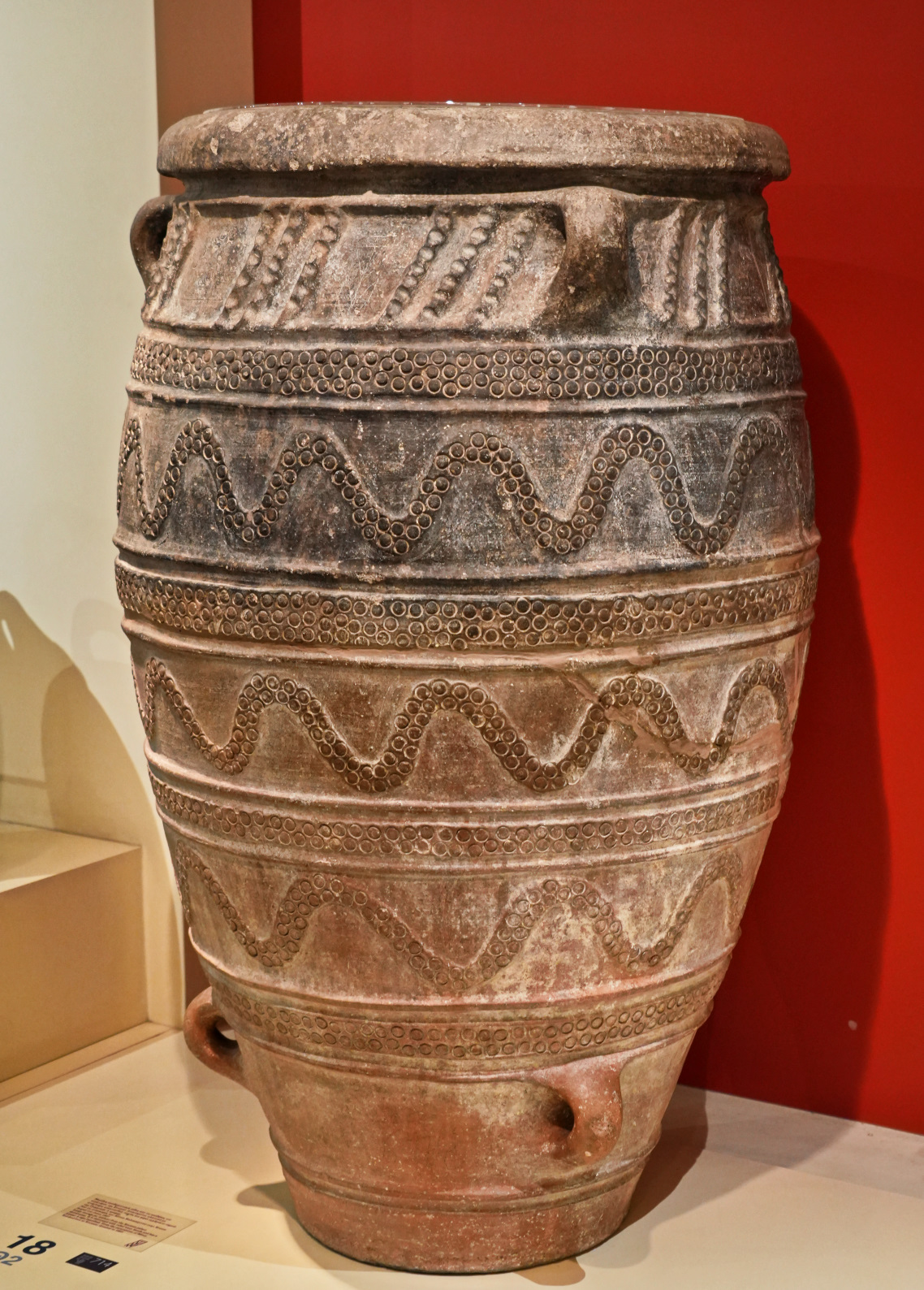
Walk into the rooms holding the massive early Greek funeral vessels—the Geometric Vases (made around the 8th century BC). You’ll notice two things immediately:
- They are huge, sometimes taller than a person.
- They are covered in intricate, obsessive geometric patterns—lines, triangles, meanders, repeated flawlessly.
And somewhere in the middle, hidden among all that perfect structure, is a small panel showing a funeral scene: people tearing their hair, figures lying in state.
This isn’t just pottery; it’s a blueprint for processing loss. They weren’t built to be subtle; they were built to be loud, public containers for a community’s pain.
The Beautiful, Ordered Sadness
The real insight here is the clash between the subject and the decoration. Grief is chaotic, overwhelming, and unpredictable. But the ancient Greeks didn’t let it be purely chaotic. They immediately imposed order onto the sadness.
The lines, the squares, the repetition—they symbolize the attempt to structure the chaos of loss. The ritual of decorating the vase, the time it took, the precision required—that was the ancient, cultural mechanism for working through the pain.
The vase itself becomes a container for the memory. It forces the memory of the dead person (the chaotic, emotional part) to coexist with a clear, beautiful, repeatable structure (the geometric patterns). The culture didn’t tell them to “just move on”; it gave them a massive, complicated physical object and a ritual to work through. The act of creating the vase was the beginning of closure.
In our modern world, we often try to rush past grief, or we let it overwhelm us completely. The ancient Greeks remind us that maybe the way forward isn’t avoidance, but imposing structure onto the difficult emotions. They made their sadness public, beautiful, and utterly precise.
Final Call to Action
The Geometric Vase taught them to structure their sadness. What is one simple, repetitive, ‘geometric’ structure (a ritual, a routine, or a dedicated time slot) that you could impose onto a confusing or overwhelming emotional experience this week?
Leave a Reply