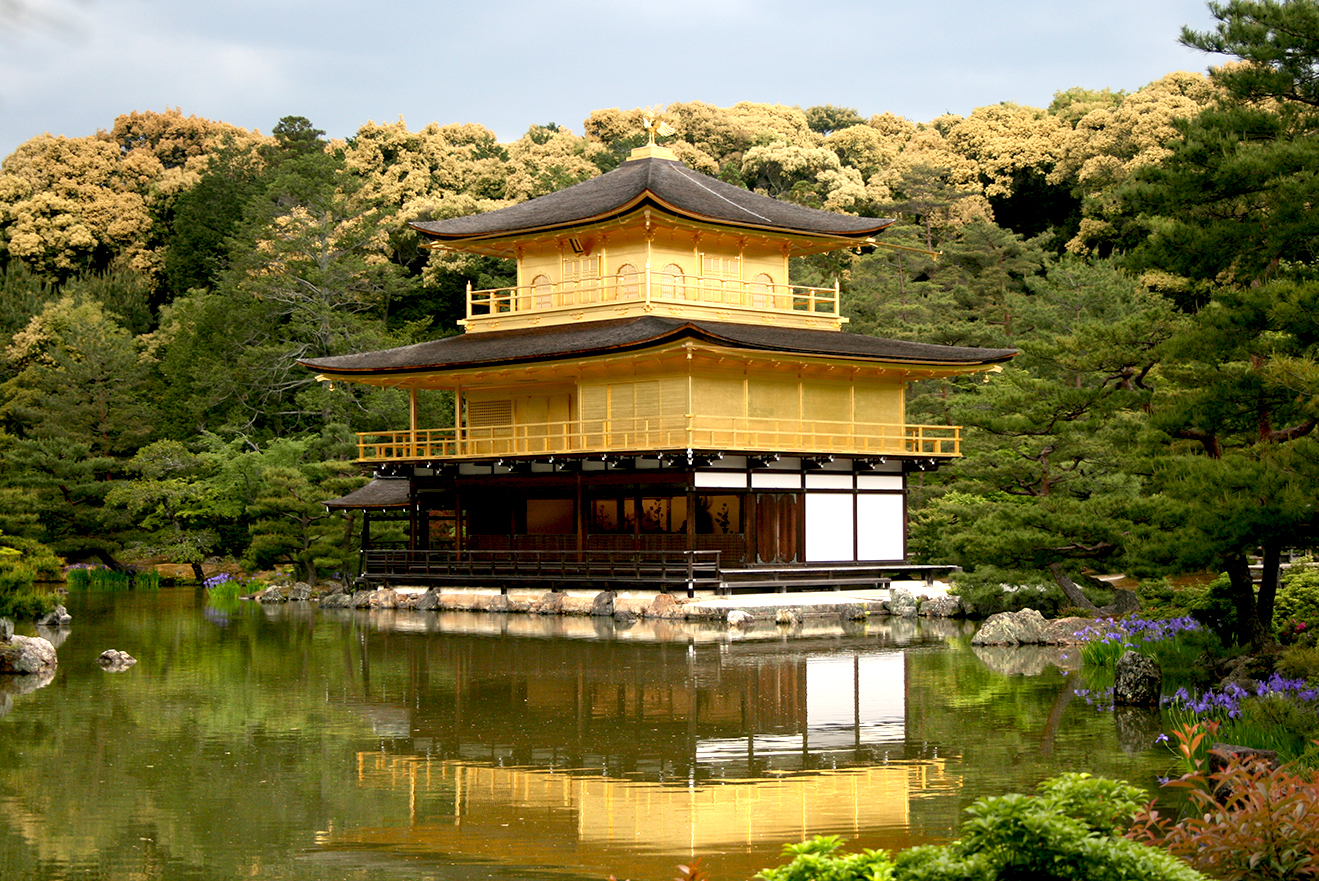
The Reflection Is the Gold: A Lesson in Mujo at Kinkaku-ji.

There are places you simply visit, and then there are places you return to for guidance. For me, Kinkaku-ji (The Golden Pavilion) in Kyoto is an essential sanctuary—a place I seek out every time I return to this exquisite culture that shaped me when I was young. It’s not just a temple; it’s a profound, glittering lesson in Japanese philosophy.
Gold on Water
The first thing that hits you, even on your third visit, is the impossible, almost shocking gold. This isn’t subtle; this is the pure, shining zafu gold leaf that coats the entire structure, turning the Pavilion into a jewel.
But the genius of this site is not the gold itself. It is the water.
The Pavilion sits on the edge of Kyōko-chi Pond, and the water is engineered to provide a perfect, liquid mirror. The real beauty of Kinkaku-ji is the reflection—the moment the intense, powerful gold is doubled and softened by the subtle, organic flow of the water and the surrounding pines. The reflection is always slightly more gentle, slightly more elusive than the reality. It forces your eye to move between the tangible and the illusion.
The Lesson of Impermanence (Mujō)
Here’s the deep irony, the beautiful essence of this place: The pavilion you see is a perfect, modern reconstruction. The original 14th-century structure, representing the delicate Mujo (impermanence) of the Buddhist world, was famously burned down by a novice monk in the 1950s.
The very act of rebuilding it in such permanent, ostentatious gold is a kind of brilliant cultural wink. They recreated the ephemeral, the beautiful illusion, and coated it in a material designed to last forever.
It asks us: What are we building in our lives that is so strong, so beautifully framed, that even if it is destroyed, the reflection—the memory, the meaning—remains perfect? We are constantly chasing the tangible thing, but perhaps the true, enduring value is the elegant reflection we cast onto the world and into our own minds.
The discipline of Japanese aesthetics is not about what you possess; it is about the finesse with which you frame the illusion.
Call to Action:
The gold forces a necessary reflection. What quiet moment this week—a perfect cup of tea, a walk in the light—can you treat as your own Kinkaku-ji, framing it perfectly in your mind for enduring reflection? Share your quiet, golden moments with me below.
Leave a Reply